
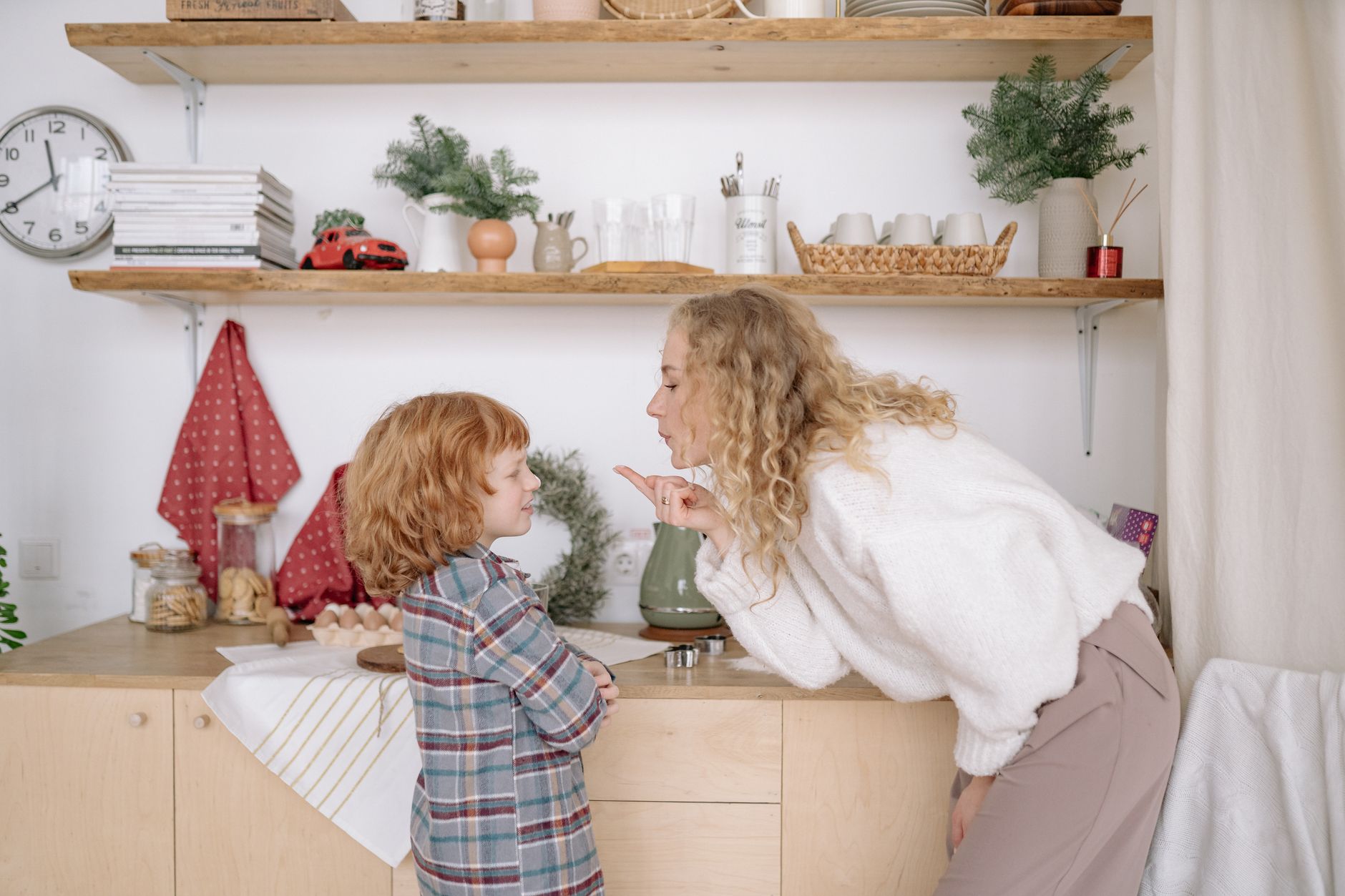
Every parent wants their child to learn from their mistakes. We want them to be kind, respectful, responsible, and able to make good choices even when we’re not there to remind them. The question isn’t whether children need discipline. They do. The real question is: Can we teach discipline without punishment?
The answer is yes. Discipline isn’t about punishment. It’s about teaching. We can set clear boundaries, hold our children accountable, and teach better behaviour without relying on punishment.
Why We Think Punishment Is Necessary
Most of us were raised believing that punishment was an important part of discipline. If we broke a rule, a punishment usually followed. We might have lost TV privileges, been sent to our room, or been told we couldn’t go out to play. Hence, we grew up believing that this is how children learn.
The reason this belief continues is that punishment often works in the short term. Imagine a child refuses to tidy up their toys. After being told they’ll lose screen time, they quickly clean everything up. Thus, from the outside, it can look like the punishment has been effective.
But stopping a behaviour isn’t always the same as teaching a better one.
A child may stop hitting because they’re afraid of being punished. But have they learned how to handle their anger differently? A child may stop lying because they’re worried about getting caught. But have they learned why honesty matters?
This is where we often confuse obedience with learning. Obedience focuses on getting children to comply in the moment. Learning, on the other hand, helps them understand what to do the next time they face a similar situation.
What Discipline Really Means
Discipline is often misunderstood. Many of us think of discipline as something we do to children after they’ve misbehaved. But real discipline has a different purpose. It isn’t about making children suffer for their mistakes. It’s about helping them learn from those mistakes.
That doesn’t mean letting children do whatever they want. Gentle discipline isn’t permissive parenting. Children still need clear rules, consistent boundaries, and consequences when those boundaries are crossed. The difference is that the goal isn’t simply to stop the behaviour. It’s to teach children what to do instead.
For example, if a child hits their sibling, punishment might focus on making them feel bad about hitting. Discipline, on the other hand, focuses on helping the child understand that hitting hurts others and teaching them a better way to express their anger.
Or if a child refuses to tidy up their toys, discipline isn’t just about getting the toys picked up. It’s about helping the child learn responsibility.
In other words, punishment asks, “How do I make this behaviour stop?” Discipline asks, “What can my child learn from this?”

Punishment Doesn’t Always Teach
Children don’t always misbehave because they know better and choose not to. Sometimes they’re still learning what to do.
For example, a child who hits may be struggling to manage anger. A child who lies may be afraid of getting into trouble. A child who shouts may not yet know how to express frustration in a calmer way.
These are all skills that children develop over time with guidance and practice.
Punishment may stop the behaviour for the moment, but it doesn’t always teach children what to do instead. They still need our help to learn the skills that will help them make a better choice next time.
That’s why discipline works best when it focuses not only on what children should stop doing, but also on what they need to learn instead.
How to Discipline Without Punishment
Disciplining without punishment doesn’t mean ignoring behaviour or lowering your expectations. It means responding in a way that teaches your child, rather than simply reacting to the behaviour. Here are some practical ways to put it into action.
Pause Before You Respond
When your child misbehaves, it’s natural to feel frustrated or angry. But reacting in the heat of the moment often leads to shouting or punishments you might regret later.
Before saying or doing anything, pause for a moment and take a deep breath. That small pause can make all the difference, helping you respond with a clearer mind instead of reacting in frustration.
Set Clear Boundaries
Children need to know what is and isn’t okay. Gentle discipline isn’t about avoiding the word “no.” It’s about saying it calmly and consistently.
For example, instead of shouting, “Stop it right now!” you might say, “I won’t let you hit your brother. Hitting hurts.” The boundary stays the same, but the message is calm and clear.
Acknowledge Feelings, Not Behaviour
Children need to feel understood, even when their behaviour isn’t acceptable.
For example: “I can see you’re really angry. It’s okay to feel angry, but it’s not okay to hit.”
This helps children understand that all feelings are okay, but not all behaviours are.
Use Consequences That Teach
Consequences are most helpful when they’re connected to the behaviour and help children learn from it.
For example, if your child throws a toy because they’re angry, the toy may need to be put away for a while. If they draw on the wall, they can help clean it.
The goal isn’t to make them suffer. It’s to help them understand the impact of their actions.
Follow Through Consistently
Children learn through consistency. If a boundary changes from one day to the next, it becomes difficult for them to know what’s expected.
Imagine your child throws a toy. One day you calmly ask them to put it away. The next day, the same behaviour is ignored. Another day, they lose screen time. When the response keeps changing, it becomes harder for children to understand what the boundary actually is.
Following through with the same boundary each time helps children know what to expect and what is expected of them.
Teach After the Moment Has Passed
The middle of a tantrum or argument usually isn’t the best time for a lesson. Once everyone is calm, talk about what happened.
You might ask, “What were you feeling?” or “What could we try differently next time?” These conversations help children reflect on their behaviour and begin building the skills they’ll need in similar situations.

What Discipline Without Punishment Looks Like
Every family is different, and there’s no perfect script for every situation. But here are a few examples of how discipline without punishment might look in everyday life.
When Your Child Hits
Instead of saying: “Go to your room!”
Try saying:
“I won’t let you hit. It’s okay to be angry, but it’s not okay to hit. Let’s use our words.”
When Your Child Refuses Bedtime
Instead of shouting or threatening, stay calm and hold the boundary.
“I know you want to keep playing. It’s bedtime now. We can play again tomorrow.”
You acknowledge their disappointment without changing the boundary.
When Screen Time Is Over
Instead of arguing or giving repeated warnings, be clear and consistent.
“I know you’d like more time. Today’s screen time is finished. We can play again tomorrow.”
Your child may still be upset, and that’s okay. You don’t have to change the boundary because they’re unhappy.
When Your Child Throws a Toy
Stay calm and make the consequence related to the behaviour.
“I can’t let you throw your toys. Someone could get hurt. I’m putting this away for now. You can try again later.”
The goal isn’t to punish your child. It’s to keep everyone safe while teaching them how to use the toy responsibly.
Children Need Both Love and Limits
Children need to feel loved, accepted, and understood. But they also need clear boundaries. These two things don’t compete with each other. In fact, they work best together.
Saying “no” doesn’t make you less loving. Holding a boundary doesn’t make you unkind. Children don’t just need parents who comfort them. They also need parents who guide them.
Discipline without punishment isn’t about choosing love instead of limits. It’s about offering both at the same time.
Children will make mistakes. That’s how they learn. Our role isn’t simply to stop those mistakes from happening. It’s to help our children understand them, learn from them, and know that we’re there to guide them through the process.
Because the goal of discipline isn’t to raise obedient children. It’s to raise children who can make thoughtful choices, even when we’re no longer there to remind them.
"Too often we forget that discipline really means to teach, not to punish. A disciple is a student, not a recipient of behavioural consequences." - Daniel J. Siegel